
Plant Support Lines for Trellises
Note: All of the parts and tools mentioned below can be found on our Parts page.
One of the best things about an EMT garden trellis is that you can customize it for the plants you are growing. Some crops only need light seasonal support, while others benefit from something stronger and more permanent.
There are lots of options for supporting plants including twine, wire, fencing, cattle panel, etc. These are the two options that we prefer:
Both options work well. The right choice depends on how long you want the support to stay in place, how much strength you need, and how often you like to change your trellis layout.
Seasonal Support: Jute Twine
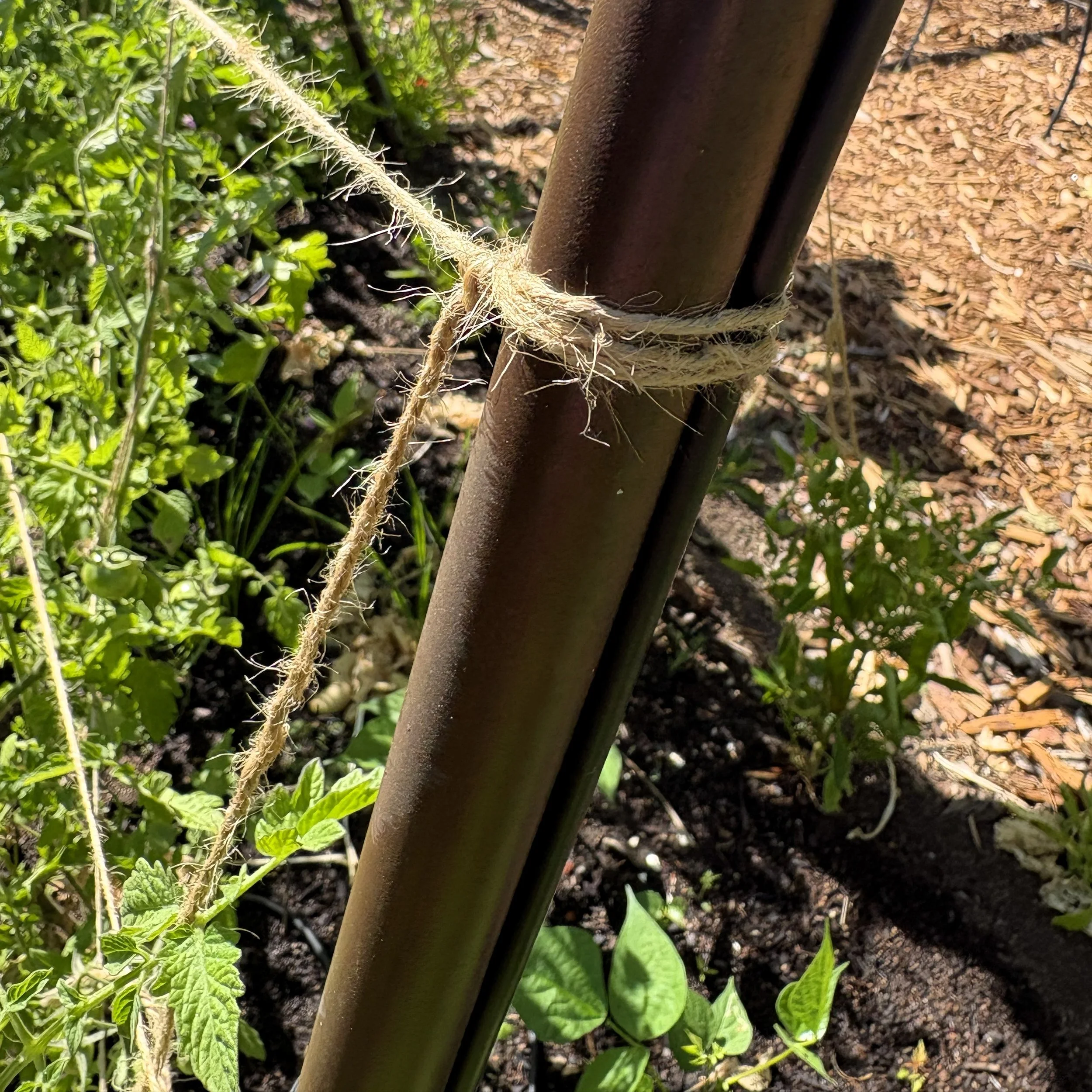
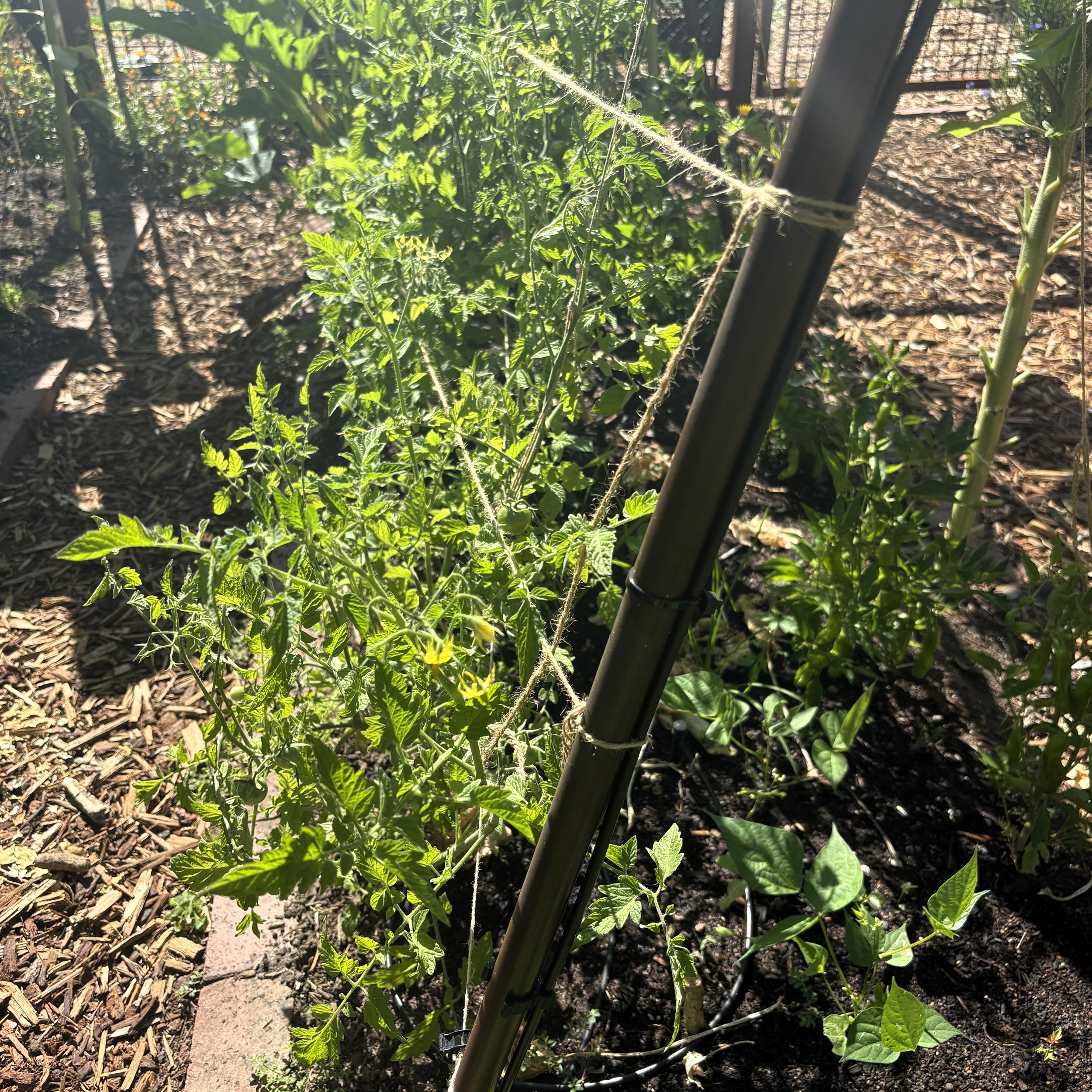
Jute twine is our favorite option for seasonal plant support. It works especially well for tomatoes, beans, peas, cucumbers, and other annual crops that grow quickly and get removed at the end of the season.
Why we like jute twine
It is compostable.
At the end of the season, jute twine can be removed with the plants and composted. Clean up is simple. Just cut it down with a knife.
It is easy to install.
Tie the twine directly to the trellis frame clips. You can run it vertically, horizontally, diagonally, or in a net pattern.
It is inexpensive.
A roll of jute twine goes a long way. This makes it a good choice when you need a lot of plant support without spending much.
It is easy to add or subtract from the trellis.
This is one of the biggest advantages. As plants grow, you can add more twine where you need it. If a section is not working, cut it off and retie it. You are not locked into one layout.
Best uses for jute twine
Jute twine is best when you want a temporary, adjustable, low-cost support system. It is a good match for annual crops and gardens that change every season.
Use jute twine when:
You want a simple seasonal setup
You plan to remove the plant support at the end of the season
You want to experiment with different layouts
You want a compostable material
You need to support lighter vines, stems, or branches
Semi-Permanent Support: Wire Rope
Wire rope is a better choice when you want a stronger support system that can stay on the trellis for multiple seasons.
Unlike jute twine, wire rope is not something you usually cut off and replace every year. It takes more work to install, but the result is a durable support line that can stay in place.
Why use wire rope?
It is semi-permanent.
Wire rope can stay on the trellis from season to season. This is useful if you know you want the same support layout every year.
It is strong.
Wire rope can handle more tension than jute twine. This makes it useful for heavier plants, long spans, or more structured trellis layouts.
It gives the trellis a clean look.
A tight wire line looks neat and intentional. It can make the trellis feel more finished, especially in a front yard or visible garden space.
It does not need to be retied every season.
Once installed, you can leave it in place and use it again the next year.
How to install wire rope on the trellis
A typical wire rope setup uses:
Wire rope
Turnbuckles
Crimp sleeves
A crimping tool
Wire cutters
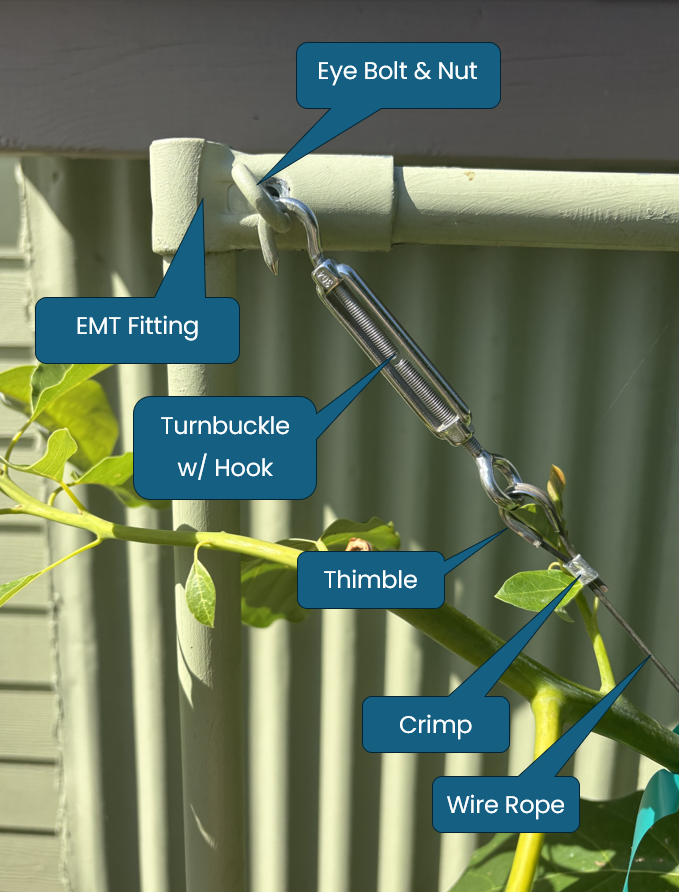
The basic idea is to loop the wire rope around or through an eye bolt, crimp the loop closed, and use a turnbuckle to tension the line.
A common setup looks like this:
Swap out the hardware that came with your EMT fitting for an eye bolt and nut.
Add the turnbuckle hook to the eye bolt.
Run the wire rope through a crimp sleeve, thimble, and end of turnbuckle.
Crimp the crimp sleeve tight.
Tighten the turnbuckle until the wire rope is snug.
The turnbuckle is important because it gives you a way to tension the wire after installation. Without it, it can be hard to get the wire rope tight and clean.
Note about crimping
Wire rope crimp sleeves need the right tool. Pliers may not be enough. A crimping tool compresses the crimp sleeve properly so the loop holds securely.
If you go this route, make sure the wire rope, crimps, and crimping tool are sized to work together.
Metal Zip Ties
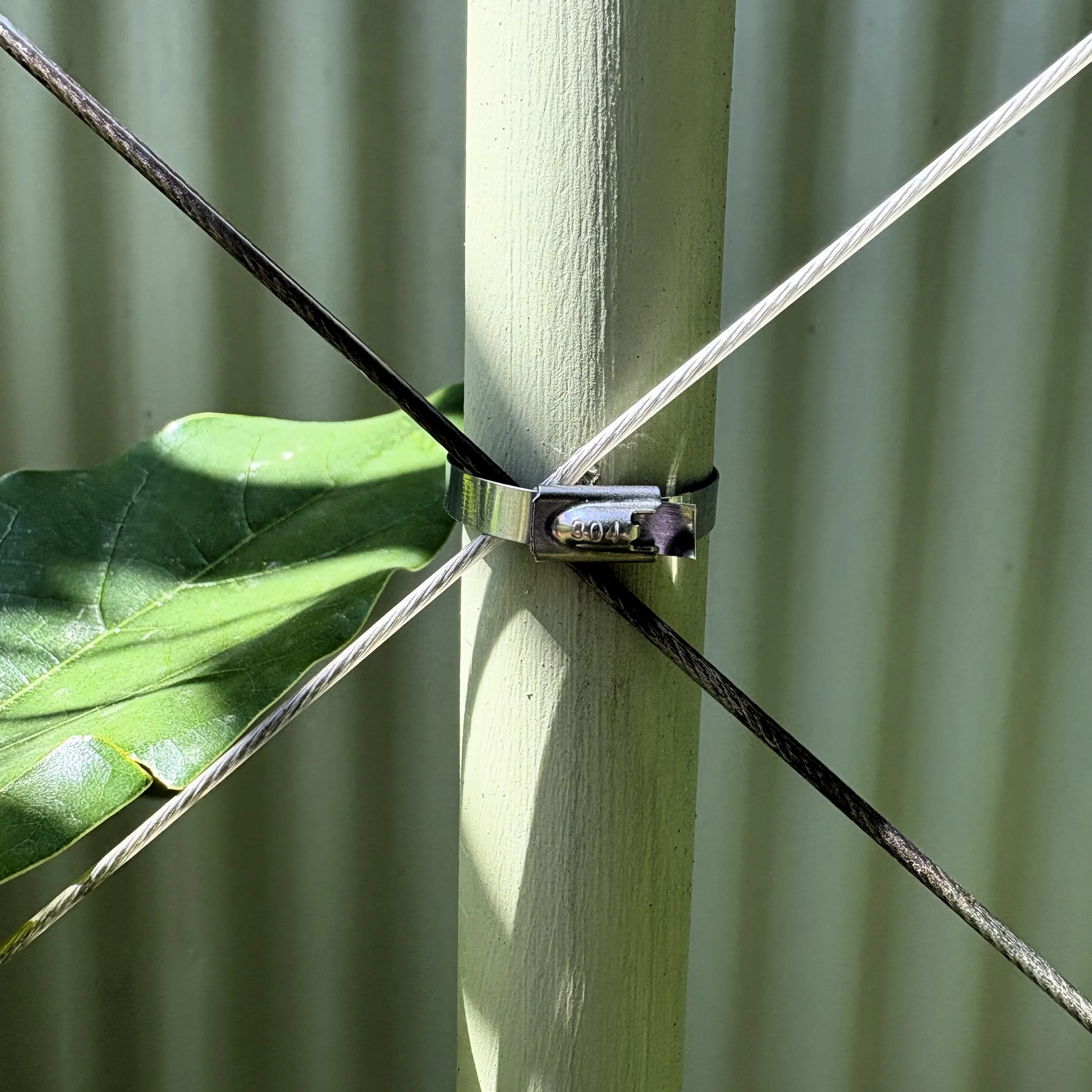
Metal zip ties can be used to attach wire rope or other semi-permanent supports to the trellis. They are a step up from plastic zip ties which also can work.
They are quick, strong, and useful when you want a simple attachment.
Metal zip ties can be a good option when:
You want to fasten wire to the EMT in other places than near the turnbuckle.
You want a fast installation
You do not need precise tensioning
You want a durable outdoor attachment
Which one should you choose?
For most seasonal vegetable gardens, we recommend jute twine. It is inexpensive, compostable, easy to work with, and simple to change as your plants grow.
Use wire rope when you want a cleaner, stronger, semi-permanent setup that can stay on the trellis for multiple seasons.