
Using a Trellis as an Irrigation System
A garden trellis is a great support system for plants, and in our garden, we also use it as a support system for irrigation.
Instead of running irrigation lines across the soil, or burying them where they are harder to see and adjust, I like being able to clip irrigation tubing to the trellis and route water where we need it. We run drip irrigation down near the base of the plants, and sometimes we water overhead.
Drip irrigation is our choice for regular, scheduled watering. We supplement drip irrigation with overhead watering in certain situations, especially when we can water early and the plants have time to dry out.
Why Mount Irrigation to the Trellis?
The main reasons are flexibility and organization.
When irrigation is mounted to the trellis, the tubing stays visible, adjustable, and out of the way. There is less chance of it getting buried, stepped on, pulled loose, or tangled around plants. (Not to mention the number of times I have put a shovel into tubing when it was hidden in the soil.)
Using the trellis this way lets us:
Keep irrigation tubing mostly off the ground
Route drip or bubbler lines down to the base of plants
Add overhead watering where it makes sense
Easily change and adjust the irrigation setup as the garden changes
Reduce how often we drag a hose through the bed
Use the trellis structure that is already there
Easily move ground level irrigation as plants get swapped out
The trellis can hold multiple main lines, and from there we can use drip, bubblers, or overhead watering depending on what we are growing.
Drip Irrigation vs. Overhead Watering
Drip irrigation is our go-to method, and we have our drip system scheduled with a timer. It puts water directly near the base of the plant. For routine watering, especially for tomatoes and other summer crops, drip is usually the better tool.
Overhead watering gives broader coverage from above, more like using a garden hose sprayer. That can be useful, but it also comes with its own pros and cons.
The trellis holds the irrigation lines. What we attach to those lines depends on the plants, the season, and the conditions in the garden.
When We Use Overhead Watering
In Sacramento summer weather, we use overhead watering maybe one or two times a week, in the morning. Most summer days here are hot and dry. If we water early in the day, the plants usually dry quickly, and we generally do not see any issues due to wet foliage from occasional overhead watering.
Overhead watering is also useful for seed starting and to hose off dusty plants.
When we want to irrigate overhead, we manually connect it to a garden hose. It is not on a timer, but it could be.
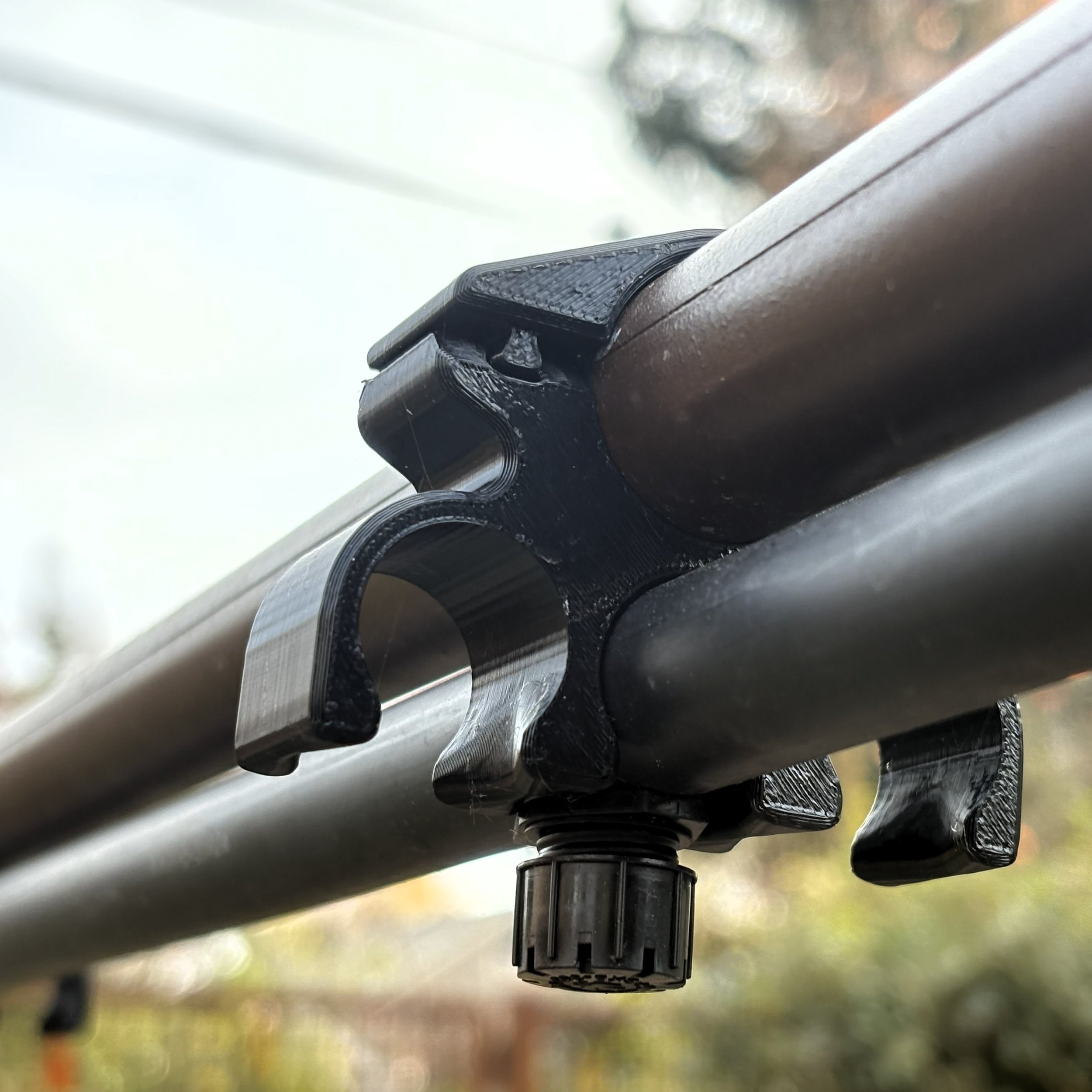
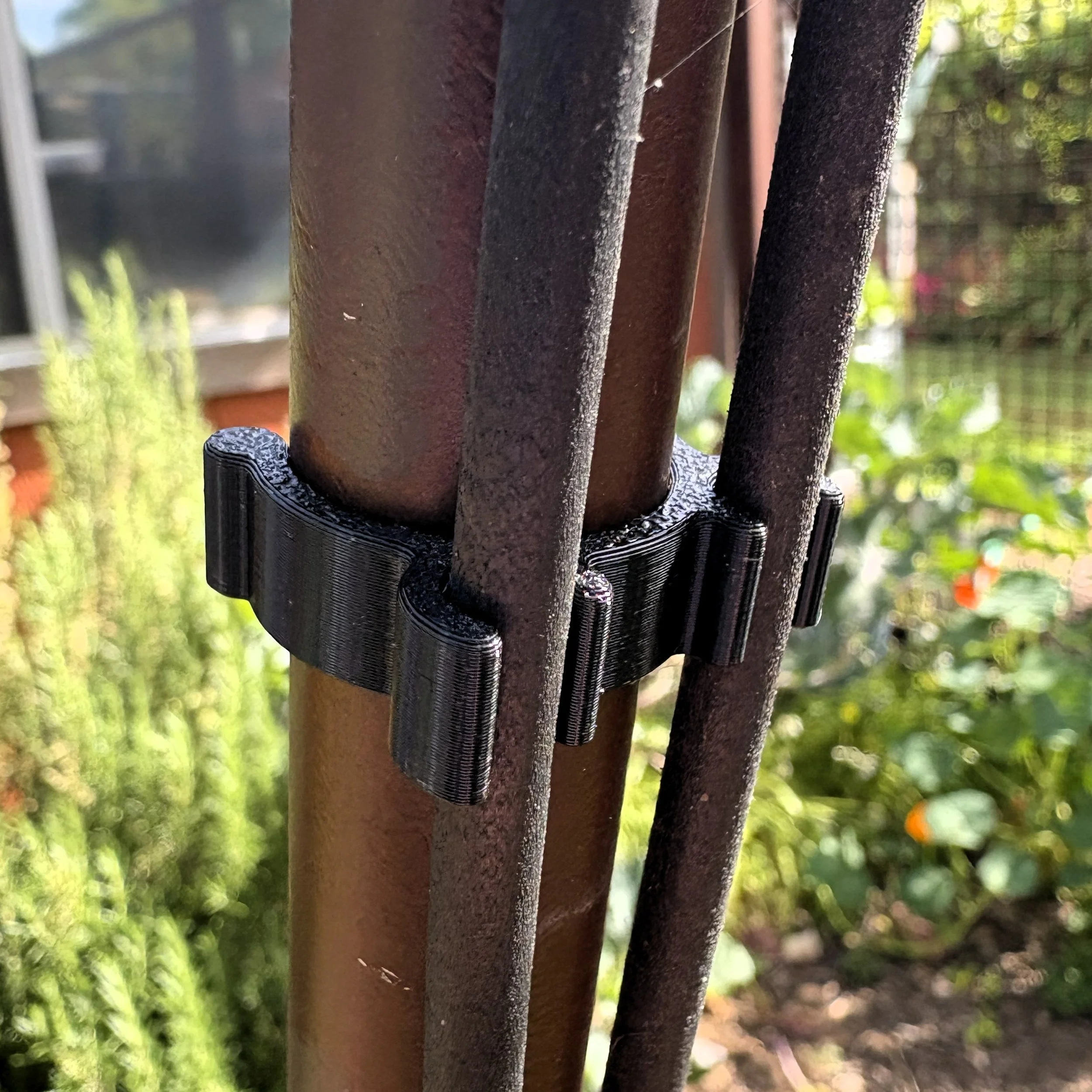
Sacramento Garden Trellis Irrigation Mounts
Our irrigation mounts are designed to carry up to 3 standard ½” drip irrigation lines. The mounts are also designed to work for overhead watering with Rain Bird Full Circle Pattern Micro Bubblers to keep them aimed where you want water and easy to adjust the flow and pattern.
A Note About Tomatoes
Tomatoes can have disease issues, and many tomato diseases are made worse by wet foliage, splashing soil, and poor airflow. Because of that, we are more careful with overhead watering around tomatoes.
For tomatoes, we still rely mostly on drip irrigation. If we do use overhead water nearby, we try to do it early, keep it occasional, mulch the soil, and prune enough to maintain good airflow.
The Main Benefit
The trellis gives us a clean, adjustable place to route irrigation. We can use drip for regular watering, and overhead watering when and where broader coverage makes sense.
It keeps the system visible, flexible, and easy to change as the garden changes.
Read More About Watering
UC Master Gardener Program of Sonoma County: Drip Irrigation
https://ucanr.edu/site/mg-sonoma/drip-irrigation